Consequence before controls
Start with what failure means for people, production and essential service.
Specialist OT / ICS cybersecurity consultancy
Clear industrial cyber risk decisions for leaders who cannot compromise safety, uptime or delivery.
01Industrial cyber resilience
Inspired IOT brings cyber, engineering and operational priorities into one decision model — so leaders can protect the physical process, preserve continuity and invest with confidence.

02Why OT is different
Industrial environments carry constraints that conventional IT playbooks rarely solve: safety-critical process, long asset lifecycles, specialist protocols, vendor access and production that cannot simply stop for change.
Start with what failure means for people, production and essential service.
Build a defensible view of assets, trust paths, vulnerabilities and ownership.
Recommend change that operational teams can implement, maintain and recover.
03Decision advantage
Connect commercial exposure, cyber evidence and engineering reality — without losing meaning between teams.

Understand consequence, investment priority and accountable next steps.
Capital aligned to operational consequenceConnect threat pathways, control maturity and standards alignment.
Evidence leaders and auditors can trust
Strengthen architecture without losing safety, availability or maintainability.
Controls the plant can operate and recover04Core capabilities
Four connected capabilities create a practical path from first insight to sustained improvement.
Build a defensible view of industrial cyber risk — from asset visibility and architecture to vulnerabilities, access pathways and control gaps.
Turn a complex industrial security framework into an achievable maturity roadmap grounded in your operating model and risk profile.
Reduce exposure across industrial networks, control systems and remote access without losing sight of safety, availability or maintainability.
Understand connected-device risk across design, deployment and operation — and establish the controls needed throughout the device lifecycle.
05Delivery model
A disciplined progression from operational context to an owned, measurable programme of resilience.
Business-critical systems, operational processes and risk context.
Vulnerabilities, control gaps, threat pathways and operational consequence.
Proportionate controls designed for industrial realities.
Architecture, governance and standards-aligned maturity.
Ongoing improvement, assurance and operational resilience.
06Defensible architecture
A secure architecture is more than a network diagram. It makes ownership visible, constrains high-consequence pathways and gives the business confidence that change, access and recovery can be controlled.
07IEC 62443 alignment
We translate IEC 62443 into an owned improvement programme: the right governance, architecture and lifecycle decisions, sequenced around operational capacity and measurable risk reduction.
08Industrial contexts
Each sector carries a different relationship between technology, consequence and recovery. The security approach should show that it understands the business.
01MFGProduction lines, robotics, plant networks and engineering workstations
Explore the risk context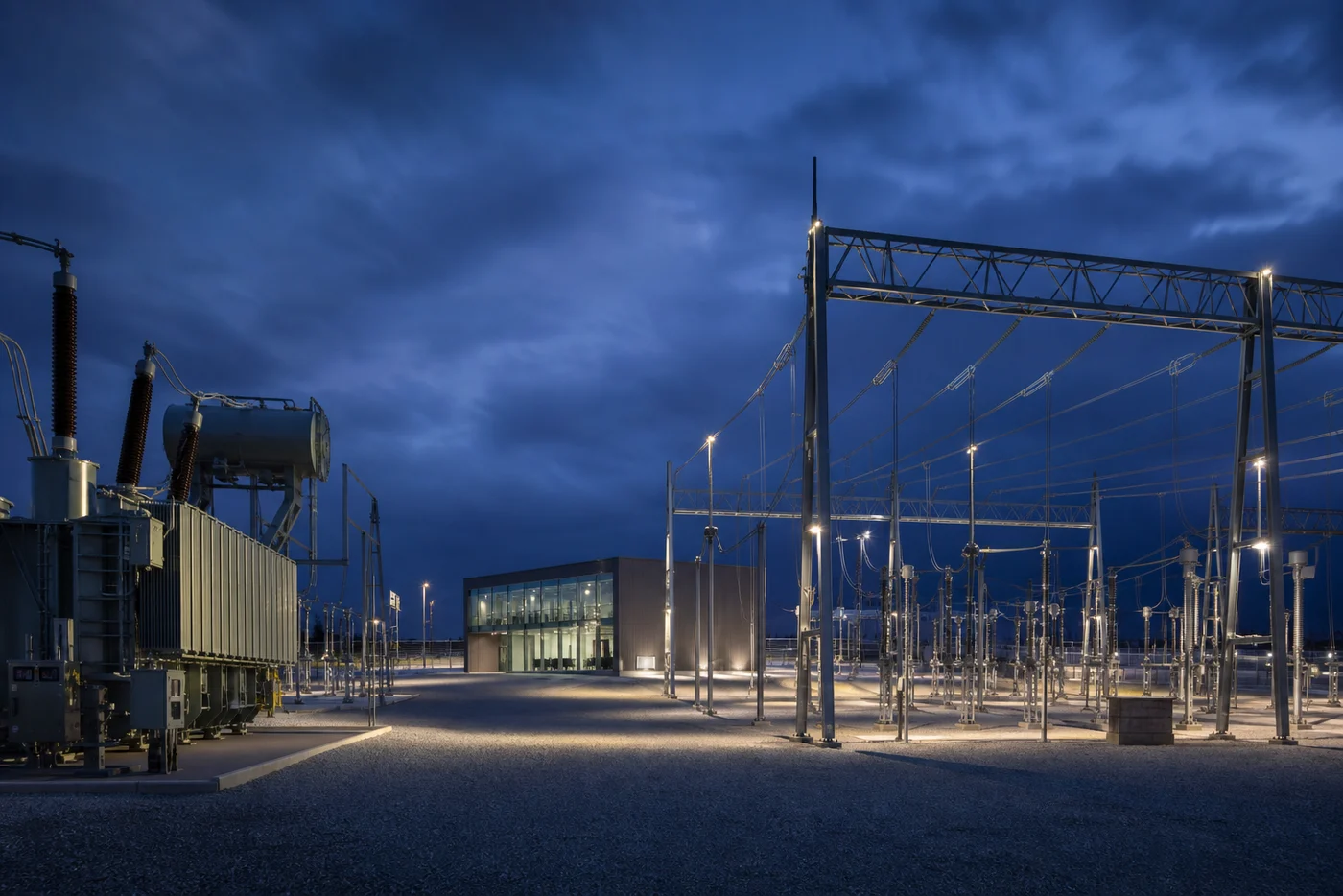 02ENU
02ENUGeneration, distribution, substations and remote operational assets
Explore the risk context 03O&G
03O&GProcessing facilities, pipelines, terminals and safety instrumented systems
Explore the risk context 04WTR
04WTRTreatment works, pumping stations, telemetry and distributed control
Explore the risk context09Executive insights
Perspectives that help leaders connect technical evidence to investment, operational priorities and long-term resilience.
OT strategy01Seven operating realities that change how risk should be assessed, communicated and reduced in industrial environments.
Read the perspectiveIEC 6244302A plain-language view of how governance, zones and conduits, risk and lifecycle responsibilities fit together.
Read the perspectiveSCADA03Recurring exposure patterns — and the practical questions engineering and security leaders should ask next.
Read the perspectiveStart with clarity
Begin with a focused conversation about your environment, priorities and the decisions you need to make.